
On this page
You can also compare against Conductor in Conductor alternatives or browse the alternatives hub.
At a glance
| Tool | Runs on | Agents | Where agents run | License | Price |
|---|---|---|---|---|---|
| Paradev | macOS; Linux experimental; iPhone and iPad companion | Claude Code, Codex, OpenCode, and other CLI agents | Local machines; remote access on Pro; sandboxed cloud workspaces on Team and above | MIT | Free locally for one user; Pro $16/user/month billed yearly or $20 monthly |
| Bossanova | macOS, Linux; optional web UI | Claude Code, Codex; OpenCode experimental, opt-in | Machines you own | MIT | Free locally; Cloud $9/month |
| Paseo | macOS, Windows, Linux, iOS, Android | Claude Code, Codex, OpenCode, and other providers | Your laptop or server; remote clients connect to it | Apache-2.0 | Free and open source |
| Orca | macOS, Windows, Linux; iOS and Android companion | Claude Code, Codex, and other CLI agents | Local machines or remote runtime | MIT | Free and open source |
What Paradev does well
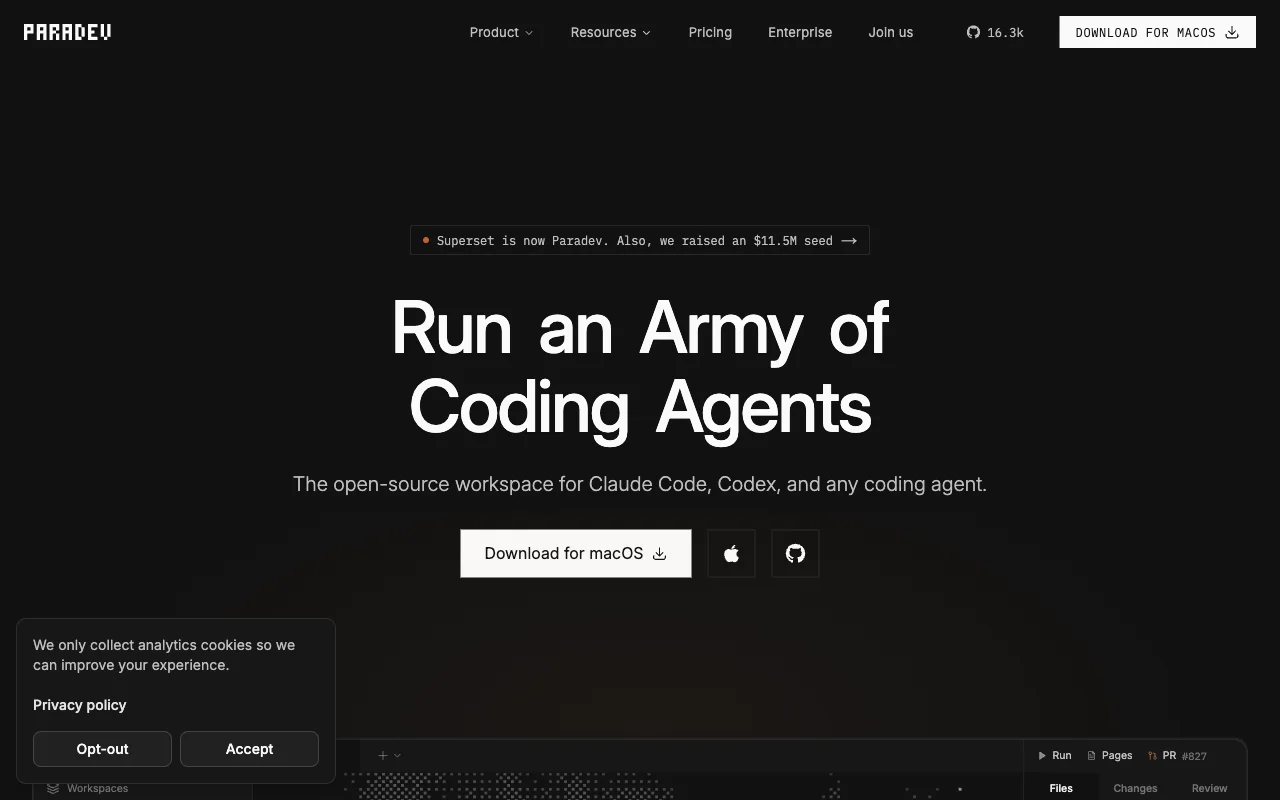
Paradev puts each agent in its own Git worktree and branch, with diffs and review in a single desktop app. It works with your existing CLI agents and provider accounts, and its source is MIT licensed. Paying for Pro unlocks remote access, automations, integrations, and the iOS companion; Team adds sandboxed cloud workspaces.
Why people look elsewhere
Two things usually push developers to look around: platform coverage and where the paid wall sits. Paradev still lists Linux as experimental and does not yet ship a Windows build. On the pricing side, local worktrees are free, while remote access and automations move to Pro and cloud workspaces require Team.
The other split is what happens after an agent opens a pull request. Spinning up five worktrees is easy; keeping those PRs moving through red CI checks, merge conflicts, and review comments is where most of your time goes.
The alternatives
Paseo
Paseo splits the stack into a daemon on your machine or server and native clients for macOS, Windows, Linux, iOS, and Android. It is free and Apache-2.0 licensed, making it the cleanest pick if you want to reach your own hardware from Windows or native phone apps without a paid tier.
Orca
Orca bundles parallel worktrees, chat and terminal panes, diffs, an embedded browser, and a CLI into one MIT-licensed desktop app across macOS, Windows, and Linux, with iOS and Android companions. It is a good fit if you want an all-in-one GUI rather than a terminal workflow.
Where Bossanova differs
Most agent workspaces stop once the diff is pushed. Bossanova treats the pull request as the unit of work, keeping the git worktree, agent chats, CI status, and review threads together in one session (PR lifecycle guide).
- Automatic CI and conflict repair: when a check fails or a branch conflicts with main, the repair plugin dispatches a follow-up session in that worktree while your existing CI runs the checks.
- Review follow-ups: with
auto-address-reviewsenabled, requested changes automatically spin up a session to address the feedback and reply on the thread. - Scheduled runs: cron jobs kick off recurring agent tasks across your daemons without manual prompting.
- Multi-machine control: use the optional Bossanova Cloud web app to watch sessions and stream live terminals from any browser, or drive another box over SSH with
boss --host(remote daemons).
The local CLI and daemon run on macOS and Linux. Claude Code and Codex runner plugins are built in; OpenCode is experimental and opt-in. See the agent plugin guide for setup, how automatic CI repair works, or pricing for the optional Cloud web UI.
brew install bossanova-dev/tap/bossanovaWhen to choose Paradev
Stick with Paradev if you are on macOS, like its desktop workspace, and want its hosted cloud sandboxes or Pro integrations in one package. The free local tier lets you test it with your own agent accounts before committing.